
Slip Disc, Sciatica, and Chronic Back Pain: Symptoms and Treatment Options
It is surprising and even disheartening to find out that you cannot perform simple tasks like sitting down at your desk, going up the stairs, or getting out of bed if you have lower back pain. You might have a spinal or nerve-related disorder if the pain is persisting or spreading down into the leg. You need to know what is causing it in order for you to be able to choose an effective remedy. Those who go for slipped disc treatment in Gurgaon must also learn how a slipped disc is not the same as sciatica and what remedies may bring relief from long-lasting back pain, to mention a few。
What Is a Slip Disc and Why Does It Happen?
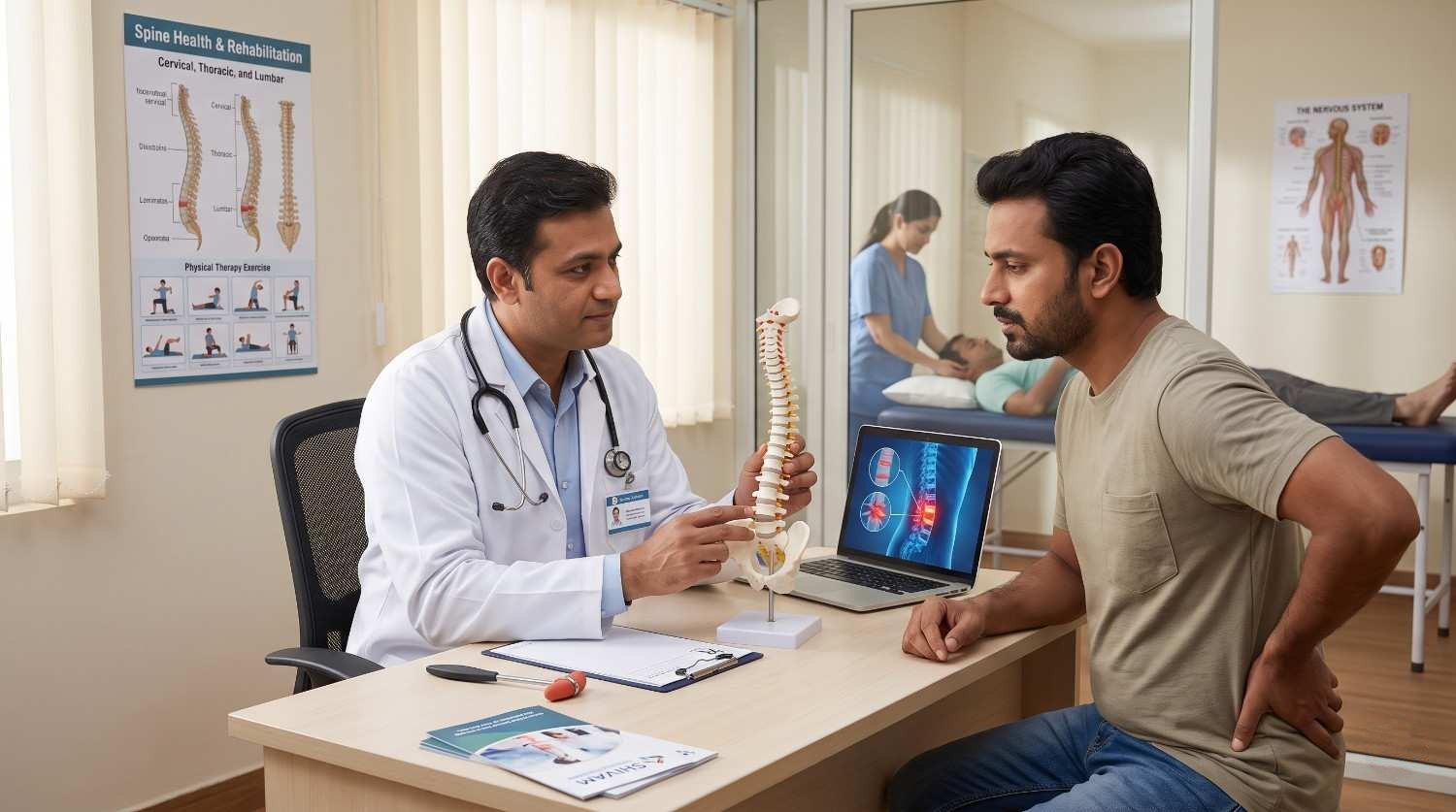
Spinal discs serve as padding between the spine bones. When one becomes bulky or if its soft center breaks the hard outer covering that surrounds it, this can result in nerve irritation if any affected nerve is close by. Besides, the disc bulging may be due to age, wear and tear, repetitive heavy lifting, a sudden heavy strain, and accidents.
If a disc in the neck (cervical) area is affected, the symptoms are different than those of a disc in the mid-back (thoracic) or low-back (lumbar) areas. A person may get only mild pain in the low back part, whereas another is afflicted not just with pain but also numbness, tingling, or even loss of strength in one of the arms or legs.
Common Symptoms That Need Attention
If lower back discomfort frequently comes back, there could be a number of underlying reasons, and here are the telltale changes to look out for:
- Bending or lifting will definitely aggravate the pain.
- Joint movement becomes painful when there are constant aches due to stiffness.
- Experiencing sensory loss or electrical-like sensations in body parts.
- Lower back pain that moves to the hip or leg area.
It is very likely the doctor will advise painkillers, modification of the exercise programme, and physiotherapy after the analysis of the condition and symptoms. Slip disc treatment in Gurgaon is not only determined by the presence but also by the condition’s severity. If a patient is experiencing a high level of nerve compression or suffering that doesn’t go away, surgical interventions may be the recourse that is being discussed.
Sciatica Treatment in Gurgaon: Understanding Nerve Pain
The main symptom of the disease is severe pain that usually moves upward from the lowest part of the back to the butt and one leg. Such pain may feel stabbing, aching, burning, or electric; these are descriptions of pains of different kinds and natures. Numbness and/or muscle weakness can be associated phenomena as well.
In cases like a bulging disc, for example, this can lead to sciatica symptoms. But other things, e.g., spinal narrowing and other degenerative conditions of the spine, may also be responsible for the sciatic nerve symptoms, which means, in essence that for sciatica treatment in Gurgaon to be effective, the pain source should be pinpointed first.
Which Treatments May Help Sciatica?
Treatment will depend on the level of the diagnosis and may involve the following:
- Medication (possibly) for a reduction of the pain level.
- Physiotherapy in the form of a variety of exercises that fit the individual patient.
- Adjustments in the activities that make the painful symptoms worse.
- If pain continues or there is weakening, the patient is referred to specialists.
You should seek urgent medical help in case of losing bladder or bowel control, feeling numb in your groin, or getting leg weakness.
When Should You Consult a Back Pain Specialist?
Sometimes the back pain may disappear all of a sudden. But once the pain starts again and interferes with one’s ability to sleep, work, and stay comfortable in any physical activity, it means a professional opinion is badly needed. A Back pain specialist is able to do a spinal examination that includes assessing joint movement, muscle strength, and checking the nervous system. The tests or treatments will then be decided.
Shivam Healthcare’s hospital website shows the details of the specialists who look after spinal injuries, bone-related problems, and back issues, viz., Dr. Rishabh Bansal, Bone Specialist, and Dr. Deepak Agarwal, Neurosurgeon. The hospital has also registered Dr. Kajal for treatment of chronic back pain, sciatica, and musculoskeletal rehabilitation. A patient’s condition and results from an examination are the determining factors in deciding who to consult.
Managing Chronic Back Pain in Daily Life
In addition to professional management, some practices can give considerable relief to back pain:
- Break your sitting time by incorporating movement breaks at least every few hours.
- Do not bend or twist your waist while lifting any heavy things.
- Stick with the exercises that a doctor or a physiotherapist has given to you instead of inventing new and unknown routines.
- Apart from that, you should book appointments regularly for any follow-up unless the pain symptoms have completely gone.
Those who are thinking about having a Slip disc treatment in Gurgaon or Sciatica treatment in Gurgaon should not wait around relying on home remedies and instead get themselves assessed. It is a back pain specialist who can advise the right treatment for you, whether it is conservative or invasive.
Conclusion
Slip disc, sciatica, and chronic back pain may manifest similar symptoms yet differ in their underlying causes and treatment plans. Having an early evaluation may not only reveal the nature of the issue but will also give an insight into the right type of management. If you want Slip disc treatment in Gurgaon, Sciatica treatment in Gurgaon, or want to consult a Back pain specialist, Shivam Healthcare can connect you to the right specialist who would be able to analyze your symptoms and come up with the best possible treatment plan for you.
Frequently Asked Questions
Q1. Whom should I get in touch with for a slipped disc or sciatica issue at Shiavam Healthcare?
Depending upon the nature of your symptoms, an orthopedic surgery specialist or a neurosurgeon could be the right person to consult. Refer to the Shiavam Healthcare doctor list to be introduced to the available specialists, get information about them, and see when they can meet you.
Q2. Is it necessary to go for an MRI for diagnosing a slipped disc?
Not necessarily! A doctor can diagnose many slipped disc cases through history and physical examination. MRI is only requested for severe, chronic, and/or cases with neurological symptoms.
Q3. Can a slipped disc be the root of lifelong nerve issues?
In rare cases of very severe or protracted nerve compression, there might be residual damage from that. But, for the most part, people get back to normal. Any new loss of bladder function, incontinence, numbness in the perianal area, or gradual loss of muscle strength is a medical emergency.